

The US FDA’s 2025 animal health approvals highlight a transformative year for veterinary medicine, with major advances spanning companion animal therapeutics, livestock productivity, poultry health, parasitic disease management, diagnostics, oncology, and genetic innovation. The latest wave of approvals reflects the industry’s growing focus on precision medicine, long-acting formulations, gene-edited livestock, sustainability-driven production solutions, and advanced therapies designed to improve animal health, welfare, and production efficiency.
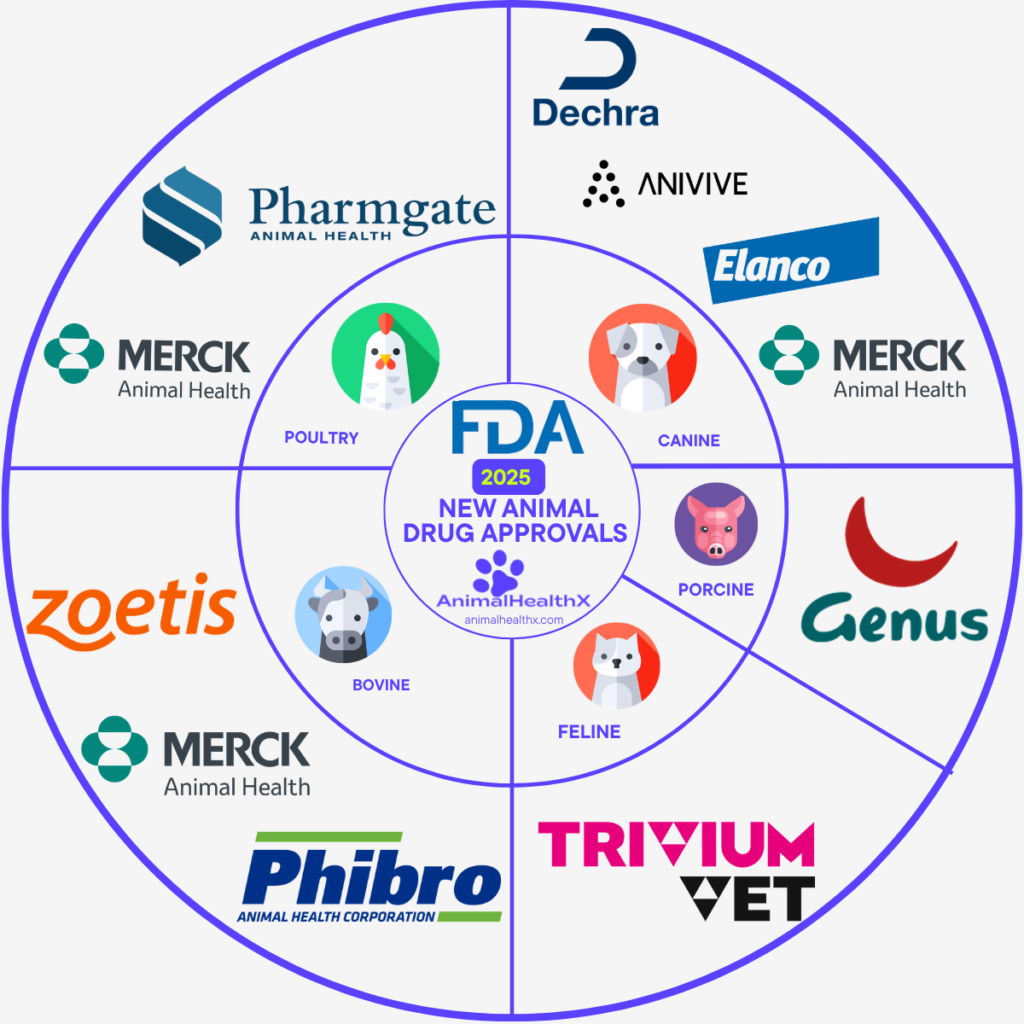
Companion animal health emerged as one of the most active segments in the FDA’s 2025 approvals. TriviumVet secured conditional approval for Felycin-CA1, a species-specific sirolimus delayed-release therapy for cats with subclinical hypertrophic cardiomyopathy (HCM), addressing a significant unmet need in early-stage feline cardiac disease. The once-weekly oral treatment is designed to reduce ventricular wall hypertrophy before progression to symptomatic heart failure.
The canine therapeutics landscape also expanded significantly. Dechra received approval for Otiserene, a single-dose, long-acting otic suspension for canine otitis externa, while Merck Animal Health secured approval for Mometamax Single, another single-dose in-clinic treatment combining antibacterial, antifungal, and anti-inflammatory agents for ear infections in dogs.
Further strengthening companion animal care, Merck Animal Health gained approval for Bravecto Quantum, an extended-release injectable fluralaner formulation providing up to 12 months of flea and tick protection in dogs. Elanco Animal Health received conditional approval for Credelio Quattro-CA1, a monthly chewable offering broad-spectrum protection against fleas, ticks, heartworm disease, intestinal parasites, and New World screwworm infestations.
Veterinary oncology and diagnostics also advanced in 2025. Anivive Lifesciences obtained full FDA approval for Laverdia (verdinexor tablets) for canine lymphoma, marking the transition from conditional to full approval. Meanwhile, Dechra expanded endocrinology diagnostics with CosACTHen, a cosyntropin injection indicated for adrenal function evaluation in dogs.
Livestock health and production efficiency remained a major regulatory focus. Phibro Animal Health secured multiple FDA approvals involving combinations of Experior, Rumensin, V-Max, and Optaflexx for beef cattle. These approvals support improved feed efficiency, increased weight gain, enhanced carcass performance, reduced ammonia emissions, prevention and control of coccidiosis, and reduction in liver abscess incidence, aligning productivity goals with growing sustainability priorities in cattle production.
Parasitic disease management also gained momentum in cattle. Zoetis received conditional approval for DECTOMAX-CA1 (doramectin injection) for the prevention and treatment of New World screwworm infestations, while Merck Animal Health secured conditional approval for Exzolt Cattle-CA1, a topical fluralaner formulation targeting both New World screwworm and cattle fever tick infestations.
The poultry sector saw continued investment in disease prevention and production performance. Merck Animal Health received approval for Exzolt oral solution to treat and control northern fowl mites in chickens through drinking water administration, reducing treatment-related stress and improving flock management. Pharmgate Animal Health also secured approval for Pennitracin MD 50G and Monteban for broiler chickens, supporting improved feed efficiency, weight gain, coccidiosis prevention, and control of necrotic enteritis-associated mortality.
A landmark development in animal biotechnology came from PIC, which received FDA approval for its gene-edited PRRS-resistant pigs. The approved deletion of exon 7 of the CD163 gene enables resistance to Porcine Reproductive and Respiratory Syndrome (PRRS), one of the most economically significant diseases affecting global swine production. The approval represents a major milestone for disease-resilient livestock genetics and the broader adoption of gene-editing technologies in food animal production.
Collectively, the FDA’s 2025 animal health approvals demonstrate how veterinary medicine is rapidly evolving through advanced therapeutics, long-acting parasite control solutions, precision diagnostics, oncology innovations, sustainability-focused livestock products, and gene-edited disease-resistant animals. As disease pressures, food security demands, production efficiency goals, and companion animal healthcare expectations continue to grow worldwide, these approvals are expected to play an increasingly important role in shaping the future of animal health.
Sources: